


Morgan
Olivia
Evans

New Grad Software Engineer,
Scientific Researcher

Morgan Olivia Evans
SCROLL
Morgan Olivia Evans at NASA Goddard

Morgan is a recent Computer Science graduate from UC Irvine with a background spanning high-performance computing, scientific research, and embedded systems. As a returning student who spent over a decade working professionally in photography and film, she brings a non-traditional perspective to engineering — one shaped by years of independent problem-solving, client communication, and creative technical thinking.

Returning to school in her 30s was a deliberate decision to pursue a lifelong passion for earth and space science. That drive led to research opportunities with NASA, SCEC, and ACCESS, a sponsored research trip to Wellington, New Zealand, and multiple publications — all before graduating.

Morgan is a seasoned technical leader with a proven track record of managing end-to-end development and research projects, and is now seeking her first full-time industry role where she can contribute to meaningful, real-world impact.

Outside of engineering, Morgan enjoys cycling with her husband and friends, playing softball competitively, 3D printing, painting, cats and traveling.


Tools & Languages

C
C++
Python
Bash
Java
Markdown
Arduino
Raspberry Pi
ESP32
CSS
HTML
Javascript
Slurm
Godot
Linux
VSCode
Jira
Git
Confluence
Docker

Affiliations

UC Irvine GODDARD SCEC ACCESS KPFF NCCS NASA UC Irvine GODDARD SCEC ACCESS KPFF NCCS NASA
KPFF

KPFF

NCCS GEOS

NASA

Jakobshavn Isbræ Glacier

ACCESS

Wellington Harbor

SCEC

CLICK

KPFF Consulting Engineers

January 2025 — June 2025

As part of UC Irvine's optional computer science senior capstone program, I led a team of six students through a multi-quarter project for KPFF, a global structural engineering firm. Our deliverable was VISTA — Visualization Tools for Structural Analysis — a full-stack 3D visualization tool built in Godot Engine and GDScript, integrating backend OpenSees TCL script processing with an interactive front-end for structural model visualization and post-processing.

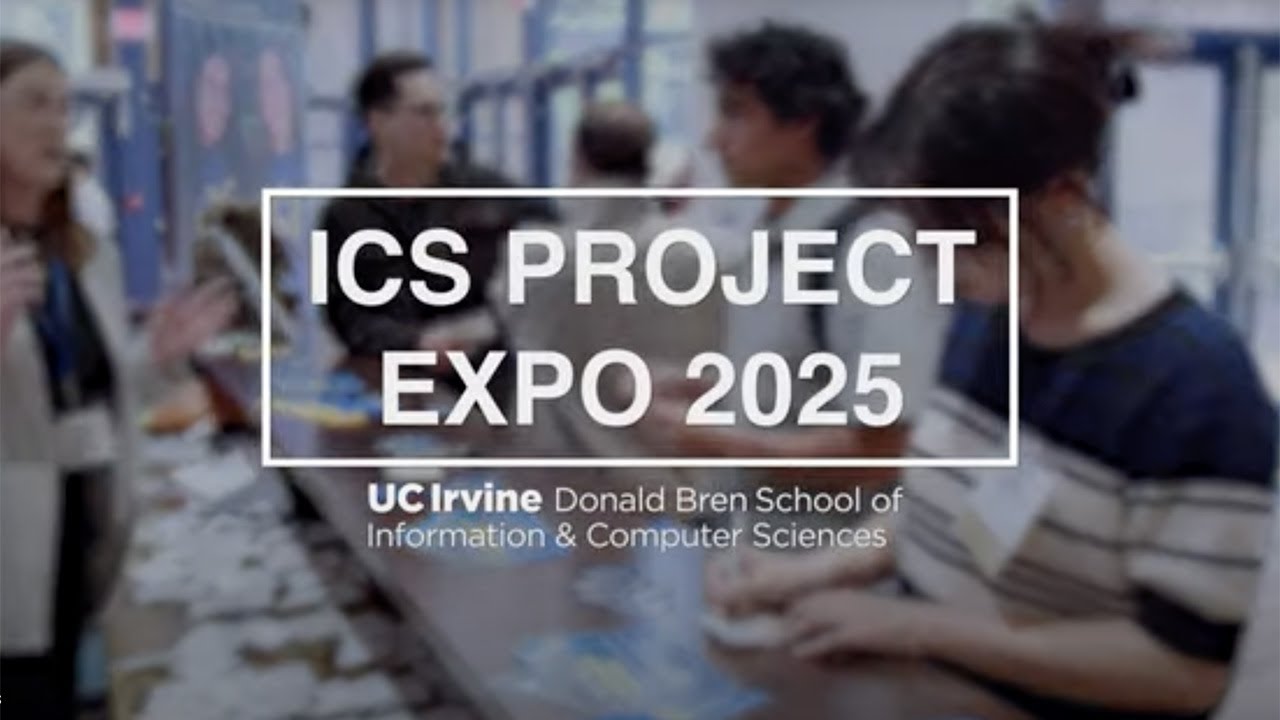
I owned front-end design, feature testing, our technical roadmap, all client communication, version control, and sprint tracking in Jira — guiding the team from prototyping through deployment in under six months. Our work earned 3rd place at the UCI Irvine ICS Project Expo.

Godot Engine GDScript Jira
GitHub

NASA Center for Climate Simulation

Summer 2024

During the summer of 2024, I worked as a High-Performance Computing Intern at NASA's Center for Climate Simulation at Goddard Space Flight Center in Greenbelt, Maryland. My work focused on investigating MPI and I/O performance anomalies for the GEOS climate model across multiple production supercomputing clusters and AWS and Azure cloud environments.

Benchmarking was conducted in two parts: OSU micro-benchmarks on AMD Milan architecture across various platforms, and I/O benchmarking on the NCCS Discover cluster comparing file systems. I also implemented and tested various MPI tuning configurations to evaluate communication efficiency and overall system performance. My findings directly contributed to advancing the performance of climate simulations running on NASA's supercomputing infrastructure.

Bash Slurm PBS AWS Azure
GitHub

ACCESS

July 2023 — June 2024

Throughout the 2023-2024 schoolyear, I worked as a remote Computational Research Intern through the ACCESS MATCH Program. My work focused on optimizing GPU-accelerated ice-sheet flow modeling software using NVIDIA profiling tools to analyze performance bottlenecks within CUDA kernels. Through targeted optimizations — removing redundancies, establishing kernel concurrency, and eliminating expensive operations — I reduced overall runtime by approximately 10%. I utilized two Slurm-managed supercomputing clusters to compare runtime, grid points, scale, and error values between test cases. I also began a codebase conversion toward a performance-portable, architecture-agnostic implementation using OpenACC. My research findings contribute to narrowing uncertainty in sea level rise prediction to better understand the effects of climate change.

Note: The performance-portable branch I developed remains active and is maintained in a private fork of the public repository.

Bash C++ CUDA OpenACC
GitHub
Ice sheet model visualization
Post-concurrency After
Pre-concurrency Before

Statewide California Earthquake Center

May 2022 — February 2023

At SCEC, I worked as a Computational Research Intern through the SCEC SOURCES Program. Working one-on-one with my research mentor Dr. John Louie, Professor of Geophysics, Emeritus at the University of Nevada, Reno, I developed and ran low-frequency, physics-based 3D seismic wave propagation models using SW4 software for the Wellington, New Zealand region — the highest-resolution simulations ever performed for the area.

My work demonstrated basin amplifications of 2-3x and showed that basin trapped waves extend shaking duration by at least five seconds — results with direct relevance to disaster preparedness in a major seismically active city. In January 2023, SCEC sponsored my travel to Wellington to present a research seminar at Victoria University of Wellington, as well as a meeting with fellow researchers at the GNS Science Institute. This work has been published and presented four times, most recently in the New Zealand Journal of Geology and Geophysics in March 2026. Additionally, I authored a revised SW4 Quick Start Install Guide to address outdated official documentation.

Publications:

Bithacks Audio Neopixel NASA MINDS NASA GLEE
CLICK

Robotic Traffic Cone

Embedded · May 2025

CON-E is a computer vision-enabled robotic traffic cone that autonomously tracks orange objects (like other cones or safety vests). This project was built in 2 days at UCI's first ever Embedded Systems Hackathon, BitHacks 2025, where it was awarded Best Meme Hack.

The system combines a Raspberry Pi for vision processing with an ESP32-S3 controlling mobility, audio, and LED-based expression. I specialized in the embedded hardware architecture, custom 3D-printed chassis, physical internal and external components, and power design (all under strict budget constraints set by the hackathon). I also collaborated on embedded-software and firmware design.

C++ Python ESP32 Arduino
GitHub

Audio Feedback Device

Embedded · May 2025

After repeatedly failing at regulating my husband's gaming volume, I created an embedded system using an ATmega32 microcontroller, discrete LEDs, and a sound decibel detector to provide real-time visual feedback for ambient sound levels. The device is designed to help gamers, who are often unaware of their volume due to noise-canceling headphones, to self-regulate their speaking volume using intuitive LED cues. Future plans include migrating to a LilyGo MCU for WS2812 LED strip integration, adding a USB-C power interface, and developing a reward-based sound history tracking system.

  • Green, yellow, and red LEDs represent real-time volume levels
  • A flashing RGB LED activates in full white after prolonged or repeated high-volume detection
  • Designed custom circuit and audio input handling in C, with a 3D-printed enclosure and regulated power system
C ATMega32 Signal Processing
GitHub

Motion-activated Cat Toy

Embedded · December 2024

Designed and built a motion-activated motorized cat toy using an ESP32 LilyGo microcontroller, integrating motor control, a speaker, LED, and accelerometer to drive autonomous state logic and interactive play.

All embedded behavior was programmed in C++, with motion detection triggering dynamic responses based on programmed thresholds. The embedded system was contained in a custom 3D-printed spherical enclosure and internal component housing, and featured interchangeable attachments.

C++ ESP32 Lilygo Prototyping
GitHub

NASA MINDS Competition

Materials Science · 2021 – 2022

NASA MINDS (Minority University Research and Education Project, Innovative New Designs for Space) is a national multi-semester undergraduate research competition supporting NASA's Artemis mission. Our team investigated whether hydrophobicity directly correlates to dust repellency, with the goal of developing a synthetic coating capable of mitigating lunar regolith adhesion on spacecraft surfaces.

Over eight months of lab research, we developed multiple synthetic dust-repellent coatings that significantly reduced regolith coverage under vacuum conditions — from 60% dust coverage to less than 20%. The competition required a structured set of formal deliverables including a materials cost breakdown, Preliminary Design Review (PDR), final technical report, and a championship presentation — providing early exposure to real engineering project workflows and documentation standards.

Our team was awarded 2nd place for Best Technical Paper and 4th place overall for Championship Design, Build & Demonstration.

Lunar Research Data Analysis Surface Chemistry

GLEE LunaSat Device

Embedded · 2022 – 2023

The NASA GLEE project is a student-led initiative run through NASA's Artemis mission, giving students worldwide the opportunity to build, design, and program a LunaSat — a small spacecraft equipped with an integrated sensor suite for gathering temperature, magnetic field, and inertial measurement data on the lunar surface. Once deployed, each LunaSat operates on the Moon for approximately 56 Earth days, transmitting sensor readings back to teams for processing and archival in NASA's research database.

As one of my earliest technical experiences, I worked as part of a small team to assemble, test, and program our LunaSat using Arduino and C++. At the time, none of us had yet been introduced to version control or collaborative development workflows — we were learning what it meant to work on a technical project as a team entirely from scratch. Looking back, it was a foundational experience that sparked my interest in both space systems and hands-on hardware development.

C++ Arduino Space Systems